Is this what you have been looking for?
August 5, 2010 by admin
Filed under Feline Future
Feeding a diet prepared with fresh, raw meat and Feline Future’s Raw Diet Premix can help prevent disease and assist in the recovery from today’s common feline ailments that cause millions of owners heartache and rob millions of cats of quality of life.
Over one decade of feed trials with a group of cats at the Feline Future Wellness Center have demonstrated, that feeding the Feline Future diet prevents urinary or struvite crystals, obesity, diabetes, and inflammatory bowl disease. It helps prevent many other diseases cause by nutritional deficiencies, and builds a healthy immune system.
How? The Feline Future diet mimics the nutritional composition of what our desert-dwelling mouse-hunters would naturally eat. Its not magic, but common sense!
What prevents disease can also aid in the recovery from it. Owners and Veterinarians alike have proven this to be true when incorporating the Feline Future diet in their cats’ and patients’ wellness plan. Being the inventor and innovator and original manufacturer of the raw diet premix, the Feline Future Cat Food Company has 15 years of experience to back you, as you embark on this lifestyle change for you and your cat.
This raw diet premix is well liked by cats and is easy to prepare. We have a premix to fit your needs and your cat’s taste buds. Feeding the Feline Future diet will not break the bank, or be your new full-time job. In cost it is comparable to feeding canned cat food, and once you have gotten used to the new routine, mixing up a batch of your cat’s raw food should not take more than five or ten minutes.
Which premix to choose?
August 5, 2010 by admin
Filed under Feline Future
Our three different premix formulas are NOT intended to address cats’ different dietary needs based on age or ailment. Our premixes offer you and your cat(s) a variety in taste. The TC premix (to which YOU add fresh, raw liver yourself) or the PLUS premix (which already contains either beef or chicken liver) can be used to feed all cats: kittens, adults, seniors, indoor or outdoor cats, breeding cats or neutered pets, underweight or obese cats, or cats affected by a number of ailments to include urinary tract disorders and diabetes and IBD. ANY one of our premix formula can also be used as a base for a reduced protein diet (for which we offer a special recipe to follow).
Our three premix formula are in essence one and the same – which the distinction that you can either choose to add fresh, raw liver (use TC premix) or save yourself the trouble and mess by using the PLUS premix with either beef or chick liver already added. Even our from scratch Do-it-Yourself cat food recipe follows the same principles and ratios as the premix diets, because they are all based on the original Feline Future raw cat food recipe.
There is no need to get stuck on one premix, however. Why not use all of them to add variety to your cat’s meal plan and prevent that one day your cat will simply decide enough is enough of the same flavor day in and day out? Use any one of our premix formulas in combination with any fresh meat of your choice. For example use InstinctsPLUS with chicken liver with chicken meat OR beef meat, or lamb meat, or venison, ect.
With all these possibilities of combining any one of our premix formulas with the variety of fresh meats available at your grocer or butcher, and your option to alternate between premix diet and from scratch diet your may only run out of creativity.
Supplemental Probiotis and Digestive Enzymes
April 26, 2010 by admin
Filed under FAQ, Health articles
The cat’s digestion is of biochemical nature. It uses strong digestive juices and enzymes to break food down. Digestive acids and gastric enzymes produced by the stomach dissolve food into a liquid within a short time. From there it is then passed in small quantities into the small intestine, where it is further fortified with enzymes produced by the pancreas and liver to aid in the breakdown of the liquid mass into nutrient molecules, which can then be absorbed into the body by passing through the wall of the intestines. Indigestible matter is condensed in the colon where liquids are reabsorbed, before the waste is evacuated out of the body.
The cat’s natural diet is that of a true carnivore. It contains no plant material or complex carbohydrates from which the cat directly, or indirectly with the aid of bacteria, obtains energy. The cat lacks all ability to process plant foods. It has no teeth to aid in mastication of fibrous plant matter, lacks enzymes to break down carbohydrates, and it’s alimentary tract is at no part host to large populations of bacteria which in other species assist in the fermentation of complex carbohydrates like fiber, which serves some species as food, or as substrate for bacteria which produce nutrients or are digested as food themselves by their host.
The cat does not need a complex digestive system capable of extracting and converting nutrients from nutritionally incomplete plant matter, because the cat’s natural diet is COMPLETE. All it needs is to be absorbed by the cat. The cat’s prey, like a mouse for example, merely needs to be broken down sufficiently by chemicals, so that its matter can be absorbed as nutrients by the cat for the cat.
Dietary probiotics, or beneficial bacteria, are beneficial to species which have formed a complex symbiosis with bacteria, to aid in the break down of the plants they ingest for food by fermenting them. Fermentation breaks food down, but the bacteria also produce nutrients as by-products which the host uses as food for itself. Since the cat does not naturally eat food of plant origin, and is physically not equipped to be host to beneficial bacteria, probiotics hold no benefit for the cat.
Animals and humans are surrounded by bacteria which will naturally colonize their bodies. Often, consuming a source of PRE-biotics, the substrate beneficial bacteria live on in the digestive tract, is more affective in creating a healthier environment for beneficial bacteria than flooding the body with PRO-biotic - which may die out due to lack of substrate. Any degree of bacterial fermentation of fecal matter that takes place in the cat’s colon may be best supported by feeding strategic prebiotics - a complex sugar substrate on which bacteria live. This can be some sort of micro-fiber or even pectin. In Feline Future’s raw diet remix, trace amounts of milk sugar from whey act as prebiotics - nurturing probiotic cultures in the cat’s colon - which will colonize the cat from the environment.
Probiotics as a supplement are very fragile. They need to be given on an empty stomach, and be stored at an ideal, cool temperature. While they may be beneficial to other species, their benefits for the cat can not be supported in theory or life. Contrary to prebiotics, the benefits of pro-biotics have NOT been documented in cats. After treatment with antibiotics, a cat’s intestinal tract is colonized quickly with bacteria without the addition of probiotics. Administration of probiotics as an aid in the treatment of diarrhea, constipation, or IBD in the cat has not been successful. Other benefits subscribed to the use of probiotics in humans have barely been researched in humans themselves. Therefore, similar benefits for the cat can only be speculation. Since probiotics have no harmful effects, it is up to the cat owner to decide if he or she wishes to use them in the cat’s diet.
Dietary supplementation with digestive enzymes is only advised if a cat has a stomach or pancreatic disorder, or a disorder of the small intestines which disable its ability to produce and release these proteins that are necessary for the breakdown of food. Supplemental enzymes can be beneficial in aging cats, but supplementation must be undertaken with care.
In general, enzymes are proteins that increase the rates of chemical reactions, and almost all processes in a biological cell need enzymes for these reactions to occur at a rate to facilitate metabolism. In the body, all tissues, muscles, bones, organs and cells are run by enzymes. The digestive system, immune system, bloodstream, liver, kidneys, spleen and pancreas, as well as the ability to see, think, feel and breathe, all depend on enzymes. All of the minerals and vitamins eaten, and all of the hormones the body produces need enzymes in order to work properly. Enzymes govern every single metabolic function in the body, from stamina, energy, nutrient utilization, and immune function. The vast majority of metabolic enzymes in the body – the enzymes that regulate everything from liver function to the immune system – are proteases, or proteolytic enzymes, which regulate protein function in the body. However, eating enzymes or eating foods high in enzymes does not automatically translate in a more efficient function of the enzymes in the cells which are responsible for health.
The only enzymes we can supplement with are digestive enzymes to help the body digest food in the event that its own supply of digestive enzymes falls short. These enzymes are classified by their substrates, for example proteases and peptidases split proteins into amino acids, and lipases split fat into three fatty acids and glycerol. Enzymes that act on carbohydrates, like sugars and starches or fiber are not important in the cat’s diet, and the cat’s body does not manufacture them naturally.
But adding enzymes as supplement it not that easy. Many plant derived enzymes burn in the mouth, since your cat can not swallow them as a pill or capsule. Some enzymes are only active in a low pH (stomach) or a neutral to high pH (small intestine). Pancreatine – a proteolytic enzyme, is by far the most effective enzyme, but can cause ulcers in the mouth and small intestine after prolonged use. Enzymes need to be added fresh to a meal at the time of feeding. They can not be part of our premix, as they may start to break down the product. They will certainly begin to digest your cat’s food when you prepare a batch.
Digestive enzymes can be added to the cat’s diet by the cat owner at his or her discretion at the time of feeding. Veterinary advice can be sought to find a prescription product which is safe to use und proven to be effective for the cat by matching the cat’s naturally produced digestive enzymes. Many store-bought digestive enzyme formulas may not be helpful to the cat, but could make the cat’s food unpalatable, or even cause burning and ulcers in the mouth.
Welcome
to the official website of the Feline Future Cat Food Company Inc. and the Instincts raw diet premix for homemade cat food.
We are here for you - driven by a lifelong love for animals, a true passion for cats, and the dedication to create the ultimate diet for your carnivorous feline friend since 1995.

Processed pet foods have made it far too easy for us for too long, and our companion animals are paying the price. Surely you thought about doing it yourself in order to do it right. The Feline Future Cat Food Company will help you to home prepare the best cat food for your cats next to mice! With the Instincts premix you always know what’s in it, because YOU put it there, but you can take comfort in us having eliminated the guesswork of making it.
Cats so familiar at first glance, but completely alien by closer observation. There is very little we as humans have in common with cats. Our social structures, means of communication, eating habits, and physical appearances and functions are at near opposite ends of the scale. It is striking that most of us can relate to them so well nonetheless. Cats have become part of our everyday lives: part of our language and culture, and the embodiment of man’s most noble virtues. As a companion they have no match. Cats have roamed earth for the past 40 million years - ever evolving and adapting to be living on nearly every continent and in nearly every climate; taking their place on top of the food chain as the perfect predator. It is imperative to understand cats’ unique adaptation to life, if we desire to understand their nutritional needs. Using our own nutritional needs as humans as a template for how to feed cats would be ill fated.

Cats are carnivores. They meet their nutritional needs entirely by consuming other animals. The ideal diet for our domestic feline companions would resemble that of wild living cats. A variety of small prey animals, such as rodents, birds, reptiles, insects and occasionally amphibians would meet all the their nutritional needs. Regrettably, such foods are rather inconvenient to obtain in our domestic setting, but the raw meat diet offers a convenient and satisfactory alternative. The raw meat diet is a concept which Feline Future has pioneered for over a decade. Over the years we are glad to have witnessed an increasing trend of caregivers becoming more pro-active in understanding their feline companions’ nutritional needs. Quality and whether a diet is appropriate to meet the cat’s biological needs have become more important aspects, than mere adequacy and cost effectiveness when selecting a nutritional regiment for a creature entrusted into our care.
Feline Future’s raw diet premix Instincts for a homemade cat food is a true revolution in feeding today’s domestic cats. Reflecting cats’ instinctive needs, our cat food premix is the result of years of research. The observation of wild-living small felines, the analysis of their prey, and the application of the cat’s nutritional requirements all contributed to the development of this premix for a homemade raw meat cat food, as did extensive feed trial with our own group of cats.
To this day, we refer to the cat food prepared with the help of our Instincts premix as a homemade cat food, because the Instincts premix originated in our do-it-yourself or “from scratch” cat food recipe, which - over the years - has become one of North America’s most popular raw meat cat foods. The Feline Future raw meat cat food recipe has been quoted and reprinted numerous times in a variety of publications, and forms the foundation of many brands of frozen cat food available in pet stores today. For many years, Feline Future published this do-it-yourself recipe as four different versions on our website. Due to it’s popularity on the commercial market, however, we discontinued to do so in 2003, because the intend for this recipe was for private, non-profit use only. Nonetheless, it is a great honour, that it is being distributed so widely today through a variety of authors and proprietors.
Over the years, caregivers and Veterinarians alike have come to know and trust Instincts premix for its quality and effectiveness in meeting the true nutritional needs of companion cats. Cats are always first at Feline Future, and our research never ends. We are continuously striving to give you the best cat food next to mice. Undoubtably, a cat’s diet will affect its health, and a thoroughly developed diet can often transform an unhealthy cat into a healthy one. However, we are not health professionals and much rather describe Feline Future’s approach to feline nutrition as that of a biologist and investigator, researching for truth to discover and explain what is natural. Our focus remains the curiosity on how things should be, with an intent to help prevent illness. Therefore, you will find little reference to disease and their cures throughout these pages, put plenty of info on the fascinating creature that is the cat.
Thank you for your visit.
Who is Feline Future?
Health is freedom. To wild cats, health is a prerequisite for survival. For cats in the company of people it is the potential to live life to the fullest. For people, a healthy companion cat is pure joy. For Feline Future, “healthy cats” is our mission.
In 1995 Feline Future was founded as a non-profit organization by Natascha Wille, originally from Germany, as a result of her passion for cats. After resigning from a volunteer position at her local S.P.C.A. Natascha was driven to provide caregivers with information to better understand and care for their cats. In the search for optimal care for feline companions, she turned to analyzing the lives and needs of small cats in the wild, leaving more conventional care methods aside, and creating a whole new picture of cat care - especially how to better meet their nutritional needs. The development of a recipe for a raw meat based diet and the growing demand for a finished product eventually turned the foundation into a business - now called The Feline Future Cat Food Company or in short: Feline Future.
Feline Future’s head office and Wellness Center is situated on Salt Spring Island off the coast of British Columbia, Canada. Our products are manufactured at and distributed from facilities in British Columbia – Canada, Oregon –USA, and in Germany to better serve our customers around the world. The ongoing study of small felines, including their nutritional needs, behavior, welfare, and care as companions remains our focus.
The Feline Future Cat Food Company has since grown into a team of dedicated people, all essential for our ongoing work. 2006 marks the year Jim Dagata from Know Bones Pet Supply LLC joint Feline Future as trusted business partner and licensed manufacturer for the entire USA and South America. Nicole Kipp-Meilwes from Tatzenladen in Germany joint the team in 2008 as representative and licensed manufacturer of the Instincts premix in the European Union. Our special partnership with Tatzenladen is also very symbolic, as Natascha herself was born and grew up in Germany. Jacques Tredoux , our indispensable accounts manager located in Alberta, Canada, as been a member of the team for years.
Our research and work would mean little without the involvement of the cats at Feline Future. These cats live our teachings every day and allow us an invaluable insight into whether our theories can prove themselves in real life. These cats are not laboratory animals, however, and Feline Future does not breed cats. The physical and mental well being of these cats is a priority, and neither is never put at risk. Our studies are based on a non-invasive approach during which the cats - living as one colony- are merely observed on a long-term basis. Currently, we are in our 15th. year of observation - a period in which cats from all walks of life have made their home with us: orphans were raised, kittens born, and we will always remember those who put closure to their lives in our midst.
1997 – 2003: The Feline Future cats in the controlled study
January 30, 2010 by admin
Filed under About Us, FF Conroled Studies
For six years Feline Future maintained a controlled study group of domestic cats in a home-like environment. The 19 cats had access to all areas of the 2 level 3 bedroom home as well as access to a garden-like glass enclosed outdoor habitat. A separate room was provided to house a 4×4 ft. litterbox. The Feline Future office and manufacturing site for InstinctsTC at that time, as well as a large kitchen for the care and feeding of the cats, and a living room for visitors and resting area for the cats occupied the remaining spaces.
Feline Future Photo Gallery
| <> |
||||
All the cats peacefully cohabitated as a colony and were never kept separated or caged. A custom made piece of furniture we named “kitty kennels” was used during feeding times to allow all cats their personal space while they were eating. The cats learned this name very fast and eagerly jumped into their respective compartments in anticipation of breakfast or supper.
Eight of the cats were born at Feline Future, while the others had come into our care at various ages as strays or from animal shelters. Three additional kittens came to us in 2001 as orphans from the SPCA and were bottle raised by us. Growing up they became part of a separate study and were the first kittens raised on our purified no-bonemeal formula. As adolescents they were later adopted into private homes. During these six years we lost one wonderful old fellow named “Odin” who came into our care at 14 years old after his owner had passed. Odin, an intact tom at his age, was a rough customer without teeth who demanded respect. We lost the battle-scarred, big, black cat - who had swiftly taken our hearts - to cancer.
Feeding Pork
January 28, 2010 by admin
Filed under Cat Nutrition, FAQ
Customer question: We’ve been using Instincts for a few months now, but didn’t see this question
in your FAQs: What about using pork in your recipes? You don’t mention it. Is it safe or is there a problem?
In the past, pork was not on our list of meats recommended to be fed raw to your cat. Even today we hesitate to list it, but we have, to some extent, incorporated it into the meal plan of our own cats, initially due to a mistaken identity of ground pork meat as ground turkey, and later to alleviate a food intolerance in one of our new cats. Cats really like eating lean pork, and in look and texture, pork is very similar to rodent meat – although the species are not related. Maybe it is because pigs are omnivorous?
What are the risks of feeding pork raw?
Pigs can carry diseases and parasites harmful to people and other animals when their meat is eaten raw or under-cooked. Trichinella and Pseudorabies (Aujeszky’s disease) being of greatest concern. Both are Reportable Diseases. They must be reported to federal, state, or local health officials when diagnosed, as part of a containment and control protocol. Both diseases are very rare in Canada and the USA due to diligent management.
Trichinella spiralis is a species of tissue-dwelling roundworm, occurring in rats, pigs, and humans, and is responsible for the disease Trichinellosis. It can occur in bears and walruses as well, and people have become infected by eating the meat of these animals. It is sometimes referred to as the “pork worm” due to it being found commonly in pork products that are undercooked. It is not a very important parasite in cats, but it can occur.
The adult trichina worm lives in the small intestine. This worm does not produce eggs, but live larvae that pass through the intestine and migrate throughout the body, where they cause inflammation. The larvae encyst in muscle tissues, and can remain dormant there for years. Encysted trichina larvae can cause muscle damage, pain, and weakness. In severe cases, pneumonia, inflammation of the brain, and heart failure may occur depending on where the larvae migrated to.
Cats become infected when eating the muscle meat or other organs of an infected animal.
Several drugs are effective in killing the muscle larvae including dewormers used for treating the cat for roundworms. Infection is prevented by not feeding raw pork or bear, and not allowing the cat to roam and hunt.
Freezing can kill the larvae of Trichinella spiralis, and pieces of meat less than 6 inches thick can be frozen at 5°F for at least 20 days to kill the larvae effectively.
In the United States, the national trichinellosis surveillance system has documented a steady decline in the reported incidence of this disease in people. During 1997-2001, the incidence decreased to a median of 12 cases annually with no reported deaths. The decline of infection was largely associated with changes implemented by the U.S. pork industry that have resulted in reduced prevalence of Trichinella among domestic swine.
Regulations to detect and control Trichinellosis in pigs have been in place in many countries for more than 100 years. Globally, outbreaks of human Trichinellosis associated with pork from abattoirs operating under modern inspection systems rarely occur; however, cases which are associated with the consumption of undercooked meat from wild boars, horses, wildlife species such as walrus and bear, and outdoor-reared and home-processed pigs continue to be reported.
Pseudorabis does not exist in Canada. In both the United States and the United Kingdom, extensive eradication programs have been launched to combat the disease. By 2004, the commercial swine population in the United States could be declared free of the disease, but Pseudorabies is still occurring in feral pigs, and backyard raise pigs are at risk.
Pseudo Rabies (Aujeszky’s disease) is a viral disease primarily of swine, fatal to cats, caused by a herpes virus attacking the nervous system. It has no relationship to Rabies, but its symptoms may be confused with Rabies. However, the course of Pseudorabies is much shorter, and distinguishes itself by the intense itching experienced by the affected cat. Pseudorabies does not present a hazard to human health, and there is no evidence that the disease is transmitted from cat to cat.
The disease is usually associated with contact with pigs, and cats may contract Pseudorabies by eating raw or uncooked pork. However, it can also infect cats by them hunting and eating infected rats. It is therefore most commonly observed in cats living on farms.
Symptoms of Pseudorabies appear 2-9 days after exposure and may include restlessness, intense pain, excessive drooling, intense itching on the head and shoulders, sudden change in behavior, breathing difficulty, excessive salivation, staggering, fever, and the cat may act as though there is something in the throat. Typically, infected cats fall into a coma and die within 24 – 36 hours. It is so rapidly fatal in cats, that there are sometimes no symptoms.
Unfortunately there is no known treatment for Pseudorabies. The only control is to prevent your cat from roaming, getting into contact with infected rats and livestock, and eating raw pork.
If you feel the benefits of feeding pork outweigh the risks, you may consider to do so, especially when caring for a cat with food allergies. To significantly reduce the risk of your cat becoming infected with Trichinella, buy commercial pork, grind it and freeze flatted in freezer bags for at least 20 days at a temperature of 5°F (-15°C ). It is recommended that your typical home freezer or deep freezer should be set at 0°F (-17°C) or lower. Since Pseudorabis does not occur in Canada, we can assume that the risk of your cat becoming infected with it when eating Canadian commercially raised pork is almost non existent. To significantly reduce the risk of your cat becoming infected with Pseudorabis in the USA, buy commercial pork only. If you are at all hesitant, serve pork only thoroughly cooked, if at all.
2003 - present : The FF Cats at Three Gables Farm
January 28, 2010 by admin
Filed under About Us, FF Cats at Three Gables, FF Conroled Studies
With the move to Three Gables Farm in June 2003 I retired the Feline Future cats after six years from being a controlled study group. Some of the cats were re-homed prior to the move, and a core group of nine cats embraced the freedom of living on acreage with me as my pets and family.
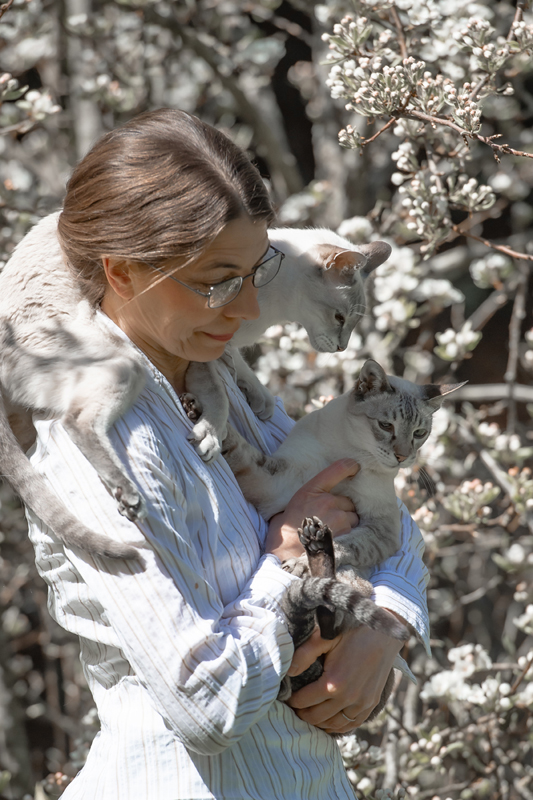
The Feline Future Cats at the Wellness Centre on Three Gables Farm enjoying a sunny March day in the Garden. Click on the thumb nail to see the full picture. Images are by Natascha Wille. Their use is not allowed without written permission of the copyright holder. Ask … don’t steal!
![]() |
![]() |
![]() |
||
![]() |
![]() |
![]() |
||
![]() |
![]() |
![]() |
My observations of their behavior never stopped, and I was fascinated to witness a much more primal side in my cats, as they went about their day without boundaries. All the cats have proven themselves as excellent hunters, providing me with a plenty of mice and voles during the summer and the occasional bird in winter.
Sadly, our newly found freedom and adventure came at a price. After five years of living on the farm, Feline Future had lost four of its beloved cats. These losses are devastating not only emotionally, but also for my long-term study on how cats age when eating the Instincts cat food.
“Cheops” whom I met 12 years earlier when working at the SPCA was one of those faces you just couldn’t leave behind. He and our beloved ”Katja” - mother to all of our Feline Future kittens - lost their lives to a traffic accident. Feline Future also lost his gregarious picture boy “Corylus” who never returned from a hunting excursion. Most of you are very familiar with the image of this well-dressed tuxedo cat from our InstinctsTC packaging. We found “Helios” curled up in is basket, where he had passed away over night from ingesting rat poison.
The debate of indoor vs. outdoor cats is no longer a debate in our home. 2009 marked the year our cats are once more a controlled group with access to outdoors protected by a fenced garden, thanks to Purrfect Fence. The peace of mind is priceless!
It is nature’s way that losses inspire new things, and I started adding new feline members to the group starting in the summer of 2005 with the lynxpoint Siamese boy “Charlie”. He was such a hand full, that “Anushi Puma, the ebony coloured Oriental came to live with us to be a playmate for “Charlie”. The two are like peas and carrots. Semi-feral “Tami” from Great Victoria Animal Crusaders joinedin May 2009, followed by “Tika”, “Yin”, and “Malaki” from the SPCA. We are having so much fun!
After six years inside, and six years without boundaries, we are looking back at much experience gathered, and look forward to the next six years of out cats being a “controlled group” once more.
More pictures, same rules. Enjoy
![]() |
![]() |
![]() |
||
![]() |
![]() |
![]() |
||
![]() |
![]() |
![]() |
15 years of Feline Future
January 27, 2010 by admin
Filed under About Us, History of Instincts TC
A history of Feline Future and the origin of the Instincts raw diet and InstinctsTC cat food premix.
“Backing our research with the test of time”.

Above: 1995 Feline Future Foundation info leaflet. One issue the organization focused
on was the right of people to keep companion cats in rental housing. Designed by
Natascha Wille.
| By 1996 Feline Future had created the “Instincts – nutriment for cats” cat food formula and published it on its website, as well as in its 39 page hand-out booklet: “Nurturing the True Carnivore”. Soon later, the organization turned business to supply an ever growing local demand for a ready-to-serve product of this formulation. Before the time when pet stores were equipped with freezers, the Instincts frozen cat food was available through home delivery. In addition, Feline Future supplied customers with a raw meat-heart-liver blend for home preparing the formula, as well as frozen mice and chicken necks! Through the internet, the do-it-yourself recipe for the Instinct formula circled the globe and found a followership with an amazing number of cat lovers, who re-published this recipe in emails, on websites, articles, magazines, and even in books. | ![]() |
| The New Business Logo |
![]() |
Left: the foundation formula of the cat food Instincts, or “nutriment for cats”, created by Natascha Wille and Scott Baker. In 1996, the formula still included vegetables. |
![]() |
Left: Natascha Wille and Scott Baker with favorite cat “Cheops” and the Feline Future cat food delivery vehicle in 1996.The slogan on the vehicle was “Taking cats back to their roots”.The frozen Instincts cat food was available made with chicken, lamb, venison, rabbit, and duck. |
| Right: a sample label of the ready-to-eat frozen Instincts cat food. The round label was applied to the top of clear plastic containers of 100g and 200g sizes. | ![]() |
![]() |
Left: cover of Feline Future’s 1996 39 page informational booklet, discussing the cat’s dietary needs as carnivore, how to make the Instincts cat food at home, as well as enclosing itemized information of the ready-to-eat frozen food. This booklet was the precursor to Natascha and Scott’s book “The Backyard Predator”. |
Ever expanding their informative and educational website, and reaching more and more people through the word-of-mouth spread of their recommendations, Feline Future developed the “InstinctsTC” powdered pre-mix in 1998 in response to a growing North American wide demand for this food. Since shipping a frozen product over large distances presented real problems, Natascha and Scott decided to supply all necessary ingredients for the formula as a powdered pre-mix. The customer only needed to add raw meat and liver. 1998 is also the year when Feline Future moved its home to set up an expanded facility on Salt Spring Island, British Columbia, to house its large study group.
| Right: the first InstinctsTC powdered pre-mix – or “dry ingredient component”. The powder was packaged as “batch” size in a plastic zip-lock pouch and sealed with all necessary instructions in a paper envelope. | ![]() |
![]() |
Left: The first InstinctsTC logo symbolized the research behind the product: from analyzing natural prey, to the study of small felines, into your cat’s food bowl. Designed by Natascha Wille. |
In 1998 Natascha and Scott met American Shorthair breeder Michelle Bernard through the common interest in home preparing cat food. As an editor by profession, Michelle offered her skills to proof-read the manuscript for “The Backyard Predator” and later wrote her own book: “Raising Cats Naturally”.
| In 1999 Natascha and Scott published the book “The Backyard Predator – a guide to nutrition for companion cats” through their affiliate the “Centre for Feline Education”.The main feature of the book was the “Instincts Recipe for a Nutriment for Cats” – now completely without any addition of vegetables, and one of its kind. Feeding companion cats an all meat diet was revolutionary! Right: On the cover: Feline Future’s signature cat “Rubus” – born and raised at Feline Future. | ![]() |
In 1999 Natascha and Scott published the book “The Backyard Predator – a guide to nutrition for companion cats” through their affiliate the “Centre for Feline Education”. The main feature of the book was the “Instincts Recipe for a Nutriment for Cats” – now completely without any addition of vegetables, and one of its kind. Feeding companion cats an all meat diet was revolutionary!
In 2001, Feline Future’s founding members parted ways, as Scott Baker pursued a different career. Natascha Wille brought Heather Bovey on board, who gave the company a publicity push.
![]() |
Left:: 2001, Natascha and Heather at a local venue – representing Feline Future and “Know Better Dog Food”.Natascha developed the dog food formula on request of customers that same year, but was – in the end – a true cat lover at heart. The company was sold a year later and now makes its home on Texada Island, British Columbia. |
![]() Above: a new face on the team, and a new face for InstinctsTC. Packaged in jars, the product took on a very clinical look. |
![]() |

. |
Left: 2003, a less clinical, and warmer look for InstinctsTC. The original logo was replaced by this new look in motion, featuring, for the first time, our cover boy “Corylus” – also one of Feline Future’s own. This handsome tuxedo cat has since become the icon for InstinctsTC. |
| In 2003 Feline Future incorporated its own feline amino acid-mineral supplement “Felamin” into the InstinctsTC pre-mix, replacing bone or bone meal in its formula, and setting itself apart once again by no longer recommending the use of bone meal or grinding whole carcasses to feed cats.Feline Future moved from its research facility to Three Gables Farm that year, retiring the cats from 6 years of being a controlled study group. Half of the group went to new homes. | ![]() |
. |
Forging ahead into 2004 with a much improved and highly refined formula, which proved itself to be even more effective for feeding cats, Feline Future went back to packaging InstinctsTC in pouches to better protect the product from light and air.Now termed the “Original” and “Ultimate Raw Meat Diet”, graced with the classic and friendly face of the product’s icon cat, InstinctsTC surely has come a long way. Nurtured like a child and born out of a passion, we look back with pride at 10 years of the cat food Instincts. In 2006, Feline Future entered into a very positive business relationship with “Know Bones Pet Supply” in Oregon, who started manufacturing the InstinctsTC under license to provide US customers with a product made in the USA, and avoid subjecting the product to the irradiation of imported goods – a practice implemented by the US government for biosecurity. |
Since 1995 Feline Future has been a leading voice in advocating a raw meat base diet for companion cats, educating thousands of cat owners worldwide about a more sensible way to feline nutrition. Our company’s ethics are rooted in a deep passion for cats, and our devotion to their wellbeing has been an inspiration to many over the years.
Over a period stretching from 2007 to 2008 Feline Future introduced a second formula “Instincts 2″ - a premix which can be used as a base for the preparation of several therapeutic formulas, including a no fibre food for kittens and a reduced protein food for cats with kidney disease. During this period, Feline Future gave its flagship product “InstinctsTC” a fresh look, and together with a cat enthusiast and cat food store owner in Germany launched Feline Future’s licensed manufacturing site for Europe.

More to come soon, to get you caught up on the ongoing story about Feline Future and its work to help you feed your True Carnivore.
What is your background?
A reader’s question:“Are you just a cat lover who has devoted your career to cats (very impressive that you’re doing a long controlled study)? Are you or anyone on staff Veterinaries or with science background? Have there been autopsy on the kitty’s who have passed away, and/or how do you gather your data, i.e.; determine the health of your animals?”
These questions don’t come up very often, and when they do, I generally do not reply to them anymore. However, I will post my reply in order to satisfy those readers who do feel a need to question the credentials of the Feline Future Cat Food Company.
Yes, I am *JUST* a cat lover and amateur biologist without letters behind my names as long as the alphabet … at least not in the field of my current profession. My love for animals goes much beyond cats, and includes our whole natural world. Feline Future supports wildlife organizations, such as the WWF, in a hope to help save the wildlife of our planet … if that is at all possible. Since childhood I have been with horses, and our farm currently breeds Swiss cows (the ones that give chocolate milk … at least the kids like to think so).
I don’t give medical advice, and being a Veterinarian would not help me in the field of nutrition. For the past 15 years I have approached the subject of cat nutrition with “common sense”. It really doesn’t take a PhD to be observant and understand the work of field biologists, and the data collected in university studies. Most good research is founded on dedication and putting in the time, and I have certainly done that - watching everything that went into and came out of a group of cats counting at times up to 22 individuals.
Any intelligent person can set up studies, observe and document, and draw unbiased conclusions. When I started this work, this field did not exist, except if working for a zoo or for a feed company. Today, I am much too busy to get a degree to justify the validity of my work. My work is not motivated by a personal need for validation, but by the need of cat owners for alternatives. My credentials are: having satisfied this need for alternatives for over a decade, having served and satisfied hundreds of customers, having earned the trust of veterinarians and cat lovers from across the continent and beyond, and - last but not least - healthy cats. My work is based on very strong ethical considerations, and no shortcuts are made to satisfy personal desires for either recognition or money. To do my job well, a title would really be of no help at all, because most of what I do is pure innovation anyway.
The cats that have passed while in my care died of causes which did not require autopsy. We lost only one cat to natural causes: a 15 year old FIV positive tom, whom we had taken into our facility a year previous to that. He died of cancer - a typical cause of death in FIV positive cats. One cat went missing when moving to our country home; three died after having been struck by vehicles on the road after being allowed outside at their retirement home. I have never believed that caring for animals and animal experiments go hand-in-hand. Our cats are not laboratory animals, and I am not going to have them cut up after they have died, in order to satisfy my curiosity. In the case of an unknown cause of death I would want to have more answers, of course, because I have a tremendous responsibility towards the users of our products. Our cats are put to rest in their favorite blanked and a good supply of catnip in my backyard. It’s a level of respect you have to have for animals, if you claim to truly care for the animals of your customers. Without it, how could I be helpful at all?
Our cats receive regular Veterinary care, such as dental care and treatment for occasional little bumps and scratches, and we do routine blood tests to monitor organ function. The same Veterinary hospital has been looking after the needs of all our cats for over a decade. The cats we bred for our studies have remained in my care since the day of their birth, and are 12 years old this year. Some of my other cats have been adopted out, while I have added some not long ago to replace the ones I have lost.
-Natascha Wille


.
.

Welcome to the official website of the Feline Future Foundation. Driven by a life long love for animals and true passion for cats we are dedicated to helping people to better understand their carnivorous feline friends since 1995.