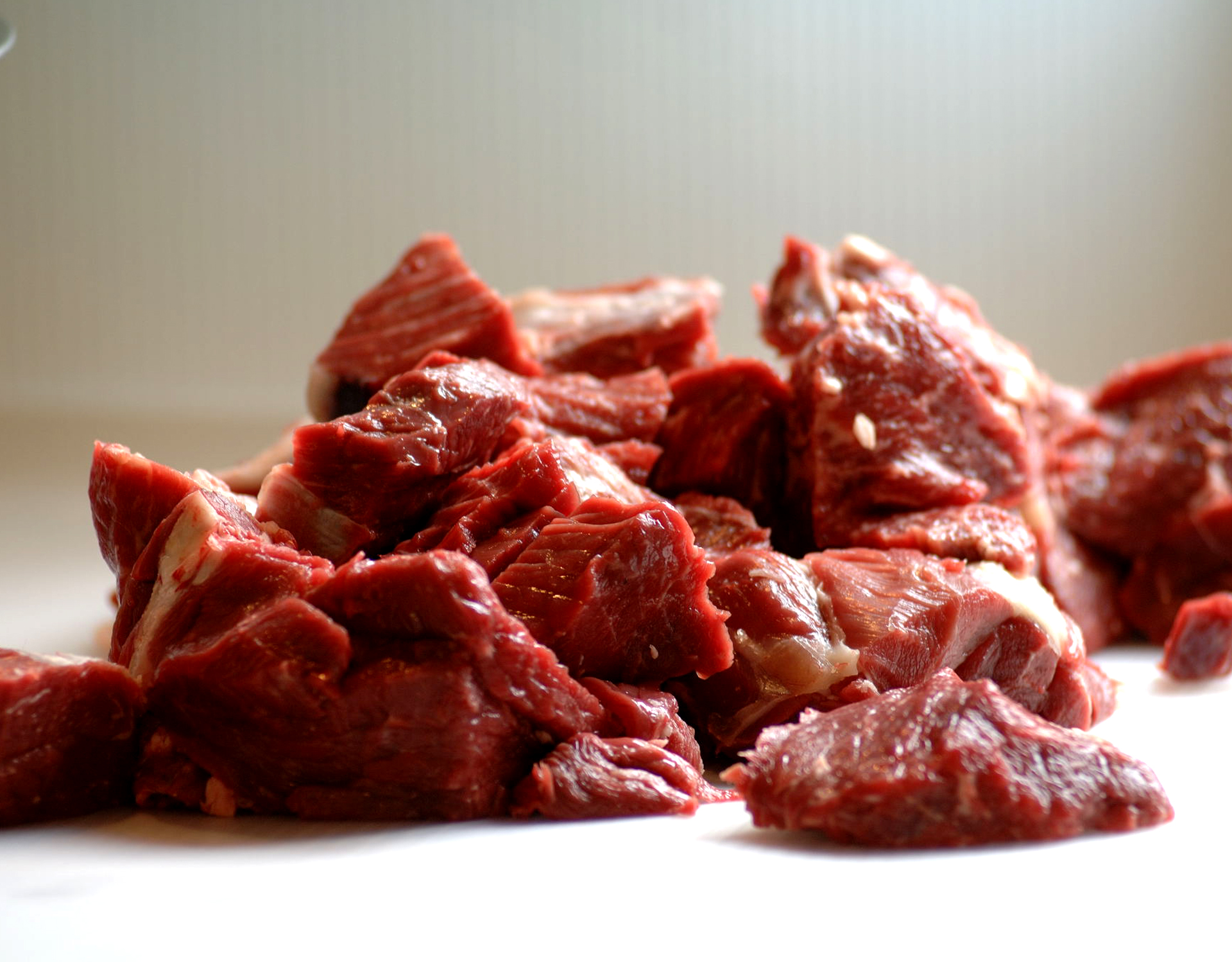
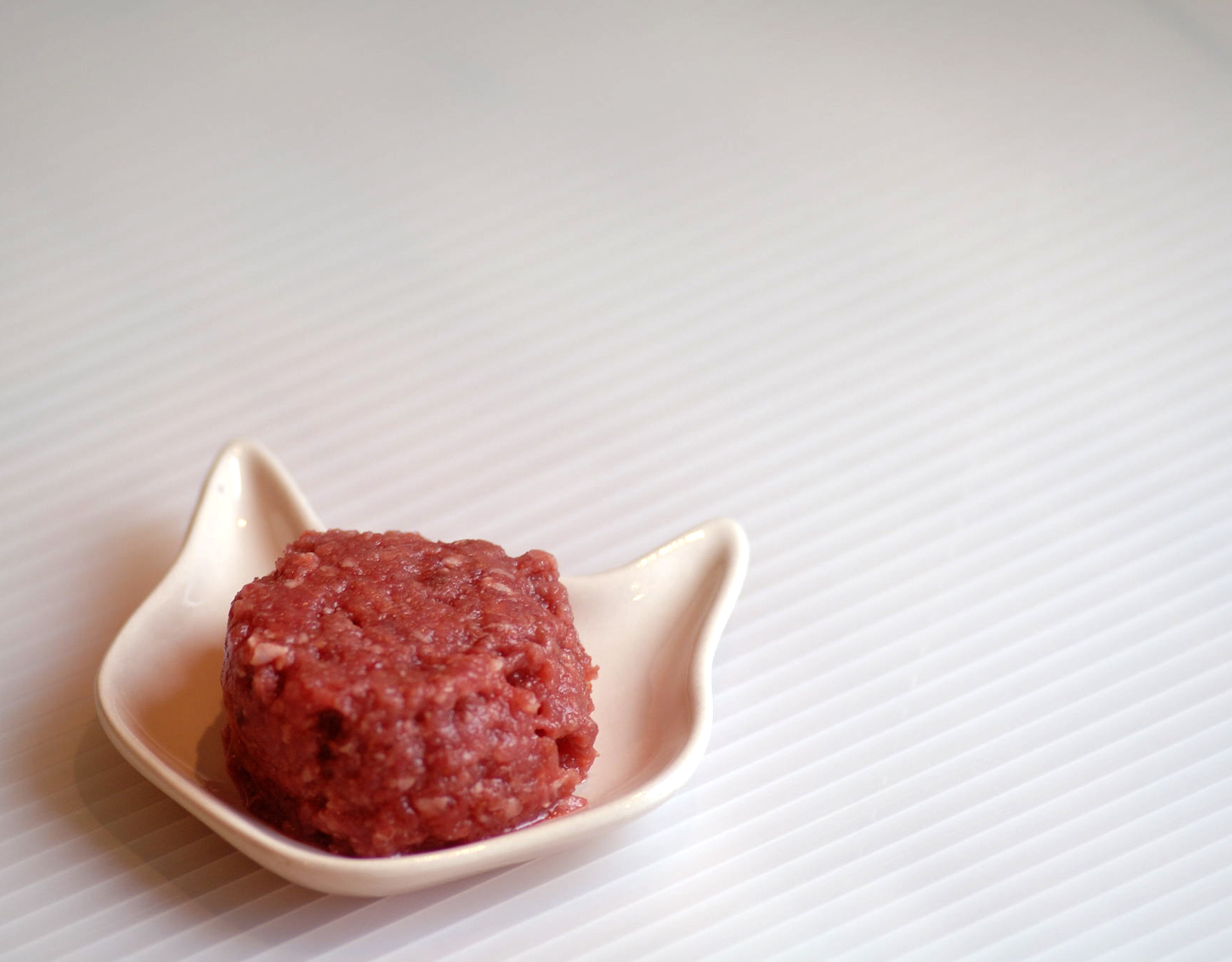
Customer question: We’ve been using Instincts for a few months now, but didn’t see this question in your FAQs: What about using pork in your recipes? You don’t mention it. Is it safe or is there a problem? In the past, pork was not on our list of meats recommended to be fed raw to your cat. Even today we hesitate to list it, but we... [Read more of this article]
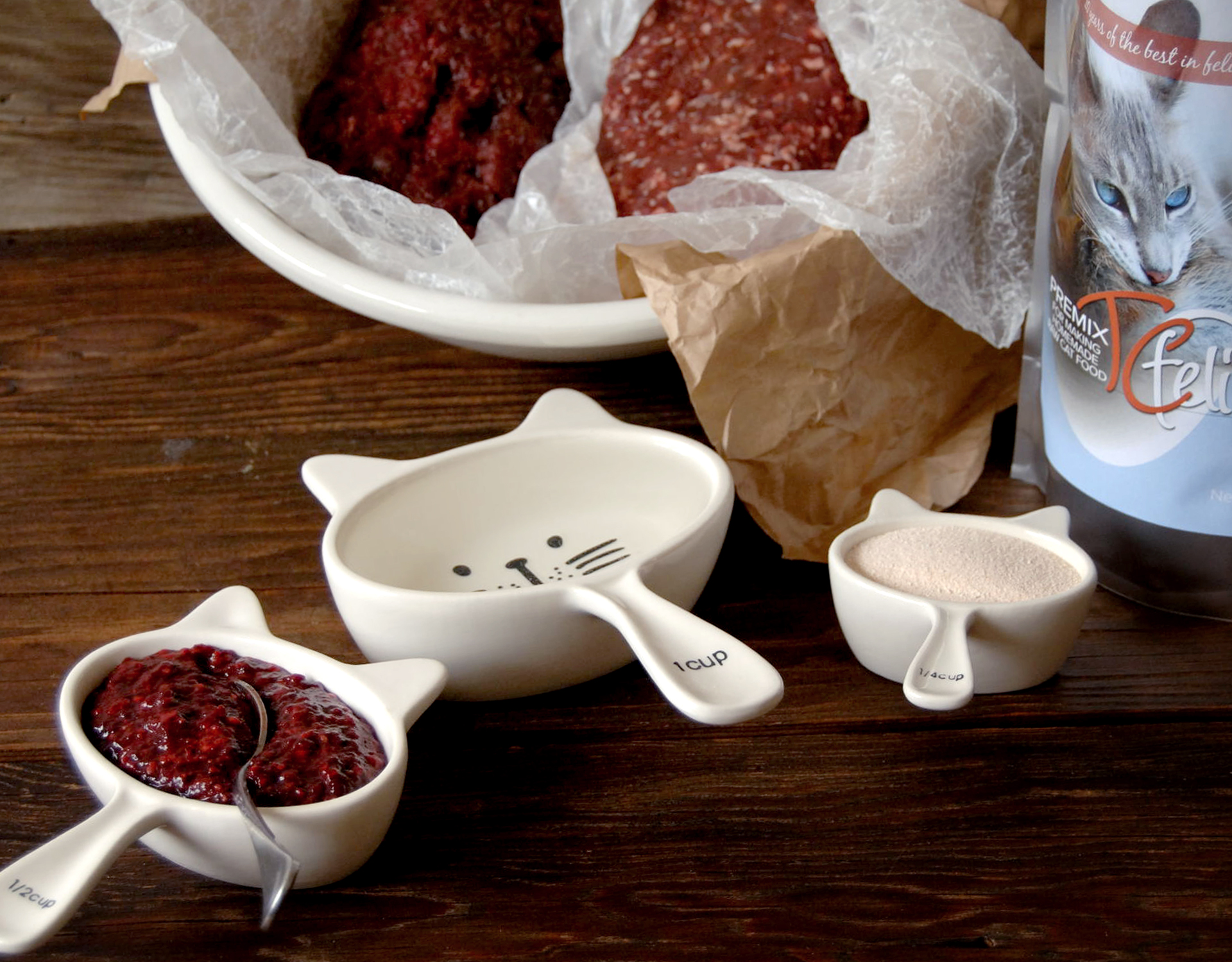
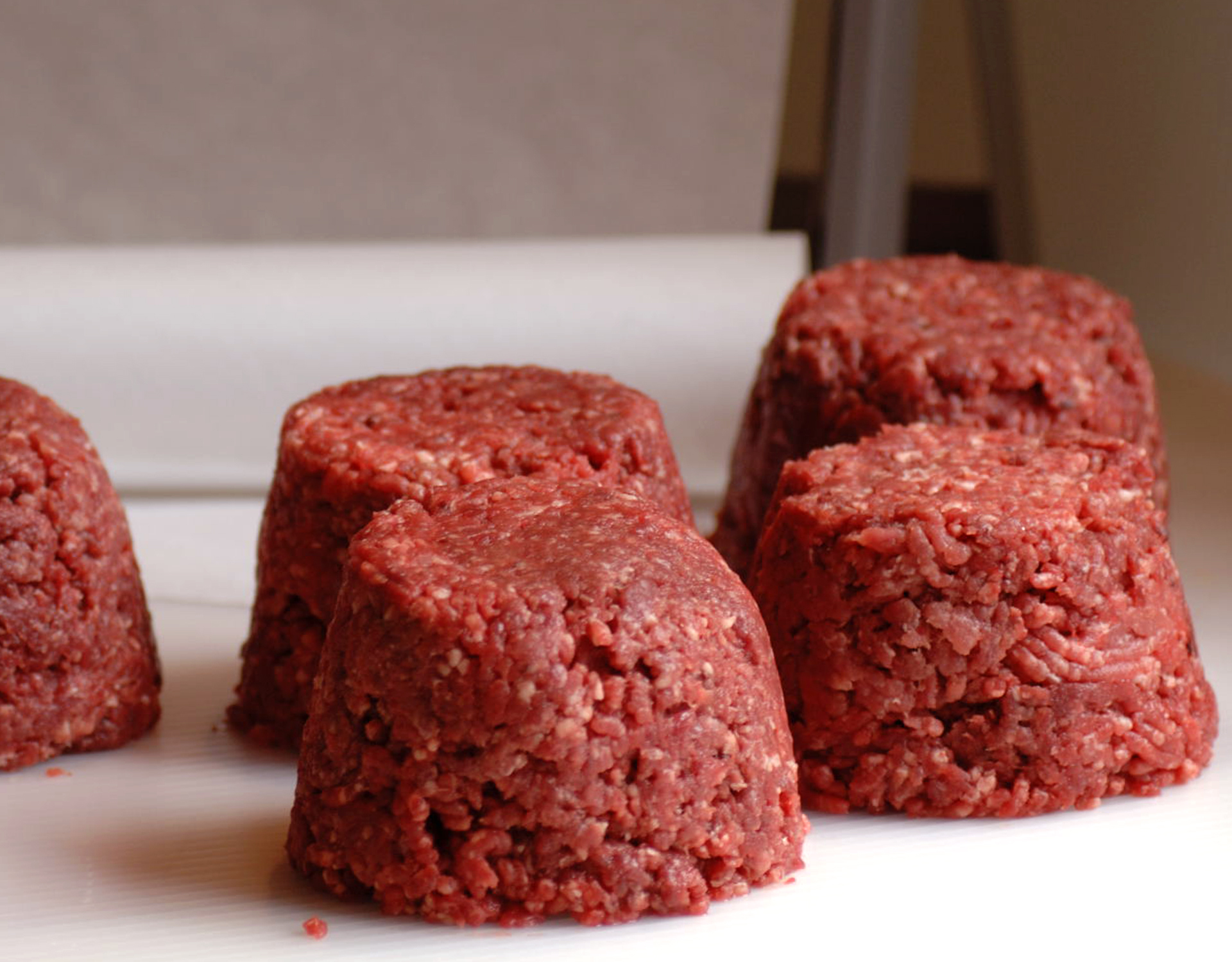
Customer question: Can I use store-bought ground meat to make my cat food with your Instincts raw diet premix, or do I have to grind it myself? Yes! The hackles might be going up with some of the raw cat food purists when I say: yes, you can use already ground meat at the grocery store for making your cat food. We do! Our advise would be to look at... [Read more of this article]
( this article was originally published by Feline Future for Christmas 2009) Not Egypt, but the “Garden of Eden”, or Fertile Crescent, was the birthplace of a handful of female cats of the species Felis Silvestris Lybia - the Desert cat - who gave rise to one of the most beautiful animal companions to accompany mankind throughout its history.... [Read more of this article]
Around fifty million years ago, the two carnivore families - Felidae and Canidae - diverged from their common ancestor. In the past 40 million years, evolutionary mutations have given rise to a variety of subfamilies and their species within the Felidae family. Modern molecular genetics and phylogenetics recognize three major lineages in felid evolution: -... [Read more of this article]
Any recommendations on serving sizes we can make can only be a good guess - a starting point to use in your play with your cat’s portion sizes and mealtime frequency. We will discuss the feeding of adult cats in this article. Feeding kittens is discussed elsewhere. Determining your cat’s ideal daily portion size is unfortunately not as easy as... [Read more of this article]
This is the first question nearly everyone asks, but ask yourself first: would a small company successfully stay in business for 14 years, and counting, if companion cats are falling ill from its recommendations? No! Cats will not be poisoned by Salmonella and/or E-coli when eating raw meat, but compared to pet food products available in retail stores,... [Read more of this article]
Although an un-pleasantry, which many cat owners would rather not have to live with, hair balls are a normal and natural behavior of the cat. To better understand what a hair ball is, lets take a look at a completely different sort of animal: the owl. Actually, at closer observation, behaviorally, the cat and owl have a great deal in common: both are... [Read more of this article]
You will discover the true benefit of feeding a homemade diet when feeding your cat meat RAW. The nutrients in raw meat are not de-natured by harmful heat. Many vitamins don’t survive heating, but most importantly, molecular structure of proteins and fatty acids change when heated. Heat breaks molecular bonds, and a once essential long chain amino... [Read more of this article]
As part of their natural prey diet, the cat does not ingest dietary plant fiber, nor does her digestion require a substrate or medium for food fermenting bacteria to live on. Fiber plays an important role in the diet of omnivores, and is essential in the diet of herbivores, but the cat as a carnivore has no natural need for fiber. Not only does... [Read more of this article]
Foreword by Jacqueline S. Obando, DVM
Foreword I have been familiar with The Backyard Predator and Feline Future and its product, Instincts, for close to a decade now. It is a pleasure to have the book’s second edition become available, so that more people can access this valuable information for the benefit of their cats. Having started out as a pet owner, then student, then veterinarian... [Read more of this article]
When Love can Kill
We should embrace and learn about the differences between our species, and not desperately seek for, or assume similarities. With today’s trend of resorting to dietary modification and the addition of herbs and supplements into our meal-plan as a natural way of combating and preventing common human ailments, one should be very careful in how far... [Read more of this article]
The Dry Cat Food Crisis
The Facts about scandalous and poor Quality Ingredient components of commercial dry cat foods are no new evedence. One thing seldom discussed, however, is the simple nature of these products being dry, and the severe cumulative side effects this leads to when fed in this manner to cats. Today, dry, commercial cat food is by far the most popular product... [Read more of this article]
Feeding Kittens
Another litter of orphan kittens raised by us. Sneakers, Peaches, and Daisy at 4 weeks old in 2003. Starting right with Kittens Kittens will easily make the transition to the raw meat diet. In fact, they often show a true craving for it and act euphoric when presented with it. In addition to their mothers’ milk, all baby mammals receive the very... [Read more of this article]
Without fail, the most typical first reaction from people, when presented with the idea of feeding raw meat to their cats, is a fear of infection with internal parasites and bacteria. In our opinion, the risk of disease to cats due to not feeding raw meat is far greater than the risk of infection with bacteria, or internal parasites. In our many year... [Read more of this article]
Feeding our domestic “pussy cat” is strongly associated with fish. The cliche portrait of the cat as a true fish lover is commonplace - fishing in the goldfish bowl, the “tuna addict”, and back alley cats snatching fish scraps from trash cans. Countless pet products cater to this image with a wide variety of fish based and fish... [Read more of this article]
Cats have evolved to fit their prey. Prey does not evolve to suit a predator. The way cats look, function, and act is because of what they eat. Therefore it is not only an assumption that a wild diet meets all their nutritional needs, but a fact. They are because of it. Learning about the nutritional needs of cats means to understand the dramatic distinction... [Read more of this article]
We get a lot of requests for more information about what meats to use in the preparation of cat food - especially, if the meat of some animal species is more suited then that of others. Muscle and organ meats are the most important foods for the cat. Special care should be applied and accordingly when selecting them for your cat. Sources It is recommended... [Read more of this article]
I don’t think it is presumptuous to say that, most care givers associate dietary magnesium with the formation of struvite crystals (magnesium ammonium phosphate) in the feline lower urinary tract - a most uncomfortable and even life threatening disease that can afflict cats. However, the fact is that, the actual magnesium content of a feline diet... [Read more of this article]
The importance of liver in the diet of the cat is often underestimated. It is impossible to single out one nutrient or food as being more important than others. All nutrients are important and many are essential to make life possible. However, liver deserves a special mention as a food so dense in nutrients that it almost deserves the title of “miracle... [Read more of this article]
Cereal grains have been a mainstay for humans for millennia. The cultivation of cereal grasses and the use of grain in our diet - a dense source of energy and nutrients - have propelled human civilization forward in its evolution. What about grains in the meal plan of cats? Cats are domestic animals, heavily influenced by human society. They... [Read more of this article]
FDA Requires that meat be “denatured”
taken from the FDA Meat Inspection Act paragraph 641 “Inspection shall not be provided under subchapter 1 of this chapter at any establishment for the slaughter of cattle, sheep, swine, goats, horses, mules, or other equines, or the preparation of any carcasses or parts or products of such animals, which are not intended for use as human food,... [Read more of this article]
Cats and dogs - the Western World’s most favorite “pets”. Unfortunately, often too little distinction is made between these two different species which in the natural world commonly pursue one another as predator and prey: canines eating smaller felines, and large felines eating canines. “Pet care manuals” usually group... [Read more of this article]
This is our 12 year old male cat "Iberis". He is a little exceptional, in that eat eats a variety of food stuff not typical for a cat, like bananas, strawberries, and he has poisoned himself with cherry tomatoes some years ago. …eat fruit and vegetables. I am prompted to write this article in response to the still widespread misconception... [Read more of this article]
Click here to view or download PDF and Read Article Read More →
Bones, Calcium, Ca:P ratio
“Why do I need to add Calcium or bone to my cat’s diet?” Cats - big, small, wild, and domestic - eat prey (their natural diet) whole, e.g. muscle, organs, bones, skin, and hair. It would be the very best for our captive and companion cats to eat just that, but this option is hardly readily available to most pet owners. The solution: we resort... [Read more of this article]
When transitioning a cat that is used to eating commercial food one must be prepared for some reluctance on part of the cat in accepting raw foods. Reviving a cat’s natural taste preference can represent a real challenge for both the care giver and their cat(s). It is important that the care giver be comfortable and confident with the new diet and... [Read more of this article]
The teeth, more so than any other feature, reveal a creature’s diet and its lifestyle. Perfect adaptation to life as a predator differentiates the cat’s physiology very dramatically from other animals. The cat’s shortened skull, which accentuates eyesight rather than the sense of smell, provides only limited space for teeth - sixteen in... [Read more of this article]
Read Learn about our raw diet premix for homemade cat food